
Choose the Athens Record That Fits the Clue
A productive Athens residents directory search starts by matching the clue to the record. A current street address points to Clarke qPublic. Its report separates the situs address from the mailing address. A person's name opens other doors. Voter self-service, deeds, court indexes, professional licenses, and corporate filings all begin with a name. An old address belongs in city directories, Sanborn maps, and newspapers. None of these is a household roll. Ownership is not occupancy, voter lists skip nonvoters, and printed directories left many residents out.
Use two anchors before matching records to one person. A full name plus parcel address works. So does a spouse plus directory year, or a deed reference plus probate file. A matching surname alone proves far less. Older indexes with OCR errors can split one identity into several spellings. So keep variants and initials alive in every Athens search.
- Search Clarke qPublic by owner, address or parcel and record the situs, mailing address, parcel ID and sales references.
- Use Georgia My Voter Page only for an identity-gated check of an individual registration; do not treat it as a street browser.
- Carry deed book and page numbers into GSCCCA, Kofile or the Clerk's courthouse terminal.
- For an earlier era, compare consecutive city directories, maps, census schedules and newspapers.
- Request an existing record through the correct Athens-Clarke open-records officer when no stable public index exists.
The Offices Behind Athens Resident Records
Athens and Clarke County unified in 1991. That merger ended the parallel city and county desks. Functions still divide by record type. The Clerk of Superior & State Courts records deeds and keeps those courts' files. The Tax Assessor maintains the ownership roll, Elections runs voter registration, and Probate Court holds estates and marriage licenses. The Athens street directory walks the address-by-address route, while these offices supply the official starting points and offline fallbacks.
Clerk of Superior & State Courts
325 E. Washington St., Suite 450
Athens, GA 30601
706-613-3190
From a Clarke Parcel Card to the Deed
Clarke qPublic takes owner, address, and parcel searches. One report can list owner names, physical and mailing addresses, assessments, building details, sale dates, and deed or plat references. Each field answers a different question. The situs locates the land, while a distant mailing address may signal an owner who lives elsewhere.
Open the Sales section and copy the deed and plat references exactly. ACC's own site-plan guidance points researchers to those numbers before a courthouse trip. Take them to GSCCCA or the clerk's public terminal. Read the sale qualification reason first. Nominal family or corporate transfers can show up as tiny amounts rather than market value.
If the portal stalls, try the Tax Assessor's page. Call 706-613-3140 or visit the counter. For permit or code files outside a stable query, request the record with the exact situs and date range.
Why Athens and Clarke Share a Records Front Door
Clarke County dates to 1801, with Athens as its county seat. The two governments unified in 1991. Modern pages say Athens-Clarke County. Deeds and many court records still carry the legal Clarke County label instead. That is not a mismatch. It is simply the naming pattern to expect when moving from an ACC department page into a county deed or court index.
Older research needs a second geographic check. Records from before county formation can sit under parent-county context, and postal places like Winterville, Bogart, and Hull do not follow the unified boundary. Trust the parcel jurisdiction, not the mailing city.
Georgia Voter Records Confirm Less Than a Roster
My Voter Page is an identity-gated tool. A voter can check status, precinct, districts, polling place, sample ballot, and absentee details. It is not a browseable Athens resident list. Public voter-file products come separately from the Secretary of State. They omit phone numbers, birth dates, Social Security data, and license numbers, and Georgia keeps no permanent party registration.
VoteSafe hides residence addresses. It covers eligible survivors and protected people in ordinary voter-list display, so a missing address can be deliberate rather than proof a resident moved. Commercial use of the elector list is barred under O.C.G.A. §21-2-601. For civic or historical work, respect the order terms. Never publish a house-by-house roster. The Georgia My Voter Page entry screen shows why the tool suits one person's verification rather than broad browsing.
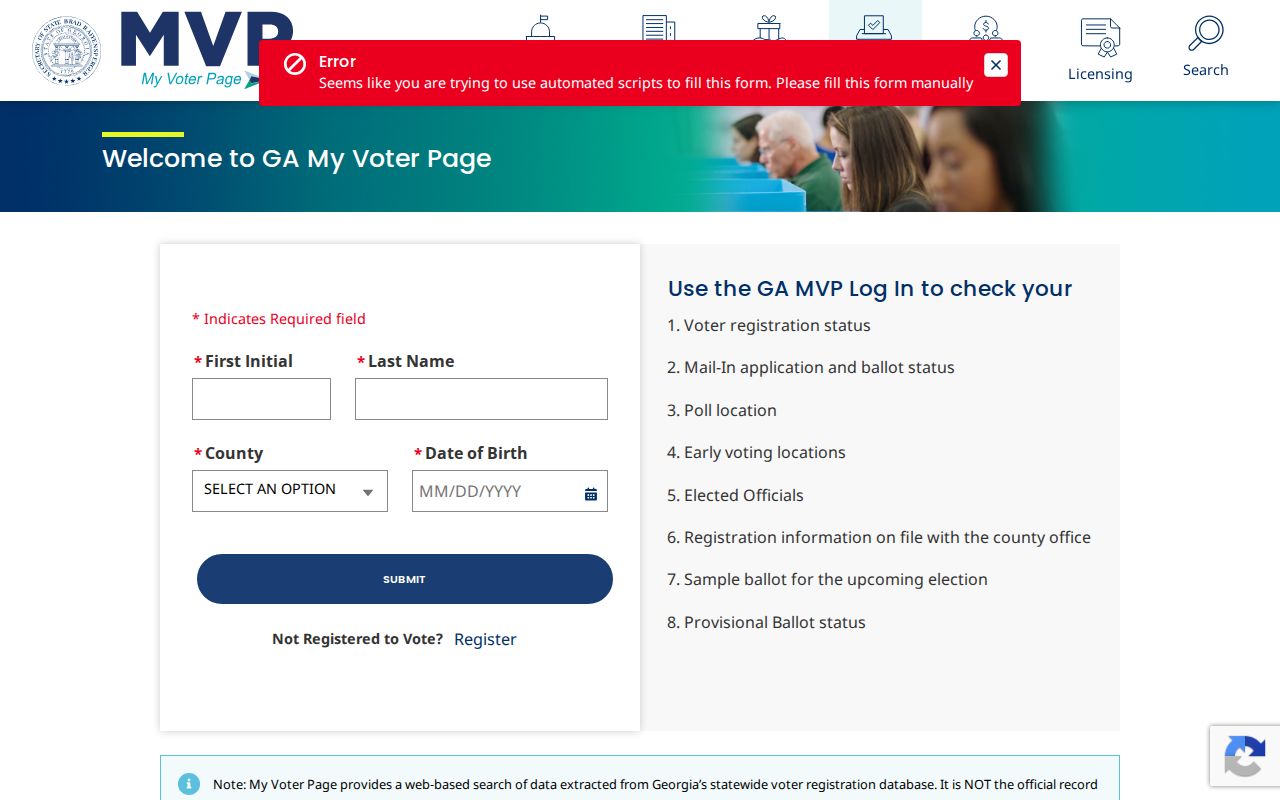
The identity gate protects the individual workflow and keeps it separate from paid public-list products.
What Today's Athens Directories Actually List
No current source lists every Athens household. Official rolls describe owners, voters, recorded parties, or public organizational contacts. The gaps matter in a university town. Institutional mail and frequent address changes blur the rolls, so treat each entry as one relationship and confirm it in another source.
| Athens source | Population represented | Custodian | How to reach it |
|---|---|---|---|
| Clarke qPublic | Parcel owners and mailing contacts | Tax Assessor | Free web report, phone or counter |
| My Voter Page / voter files | Registered voters, with protected fields withheld | Secretary of State and Elections | Individual lookup or ordered file |
| GSCCCA and Kofile | Parties to recorded deeds and liens | Superior Court Clerk | Index/account or courthouse terminal |
| ACC staff directory | Government employees at work | Unified government | Free online; not residence evidence |
| Registered Neighborhoods | Public association contacts | ACC Planning | Free map and directory; not a member roster |
A name alone breeds false matches. The Athens resident lookup shows the method. It compares two anchors and reads a court disposition, license status, or deed role without turning a public contact address into a claimed home.
When the Web Trail Stops, Route an ACC Request
The Athens-Clarke open-records page sorts requests by department. General questions, Police, Sheriff, and Tax Commissioner or Assessor contacts each sit in their own lane. Pick the right lane first. A strong request describes an existing record with the department, an address, a date range, a case or permit number, and your preferred format. Copies can get costly, so ask to inspect instead. The Georgia Open Records Act, O.C.G.A. §§50-18-70 through 50-18-77, gives the office three business days to respond. The reply may cite exemptions, timing, and estimated cost. The law does not require staff to build a new compilation for you. Request an existing permit log or case file, not a resident search on your behalf.
Read Clarke Court Names Through the Outcome
Georgia Court E-Access sends Clarke Superior and State Court searches through participating providers. Some require an account. The courthouse public terminal stays the authoritative fallback. Search name variants within a date range. Then open the docket sheet and separate filings, charges, judgments, dismissals, and final dispositions. A name match alone proves neither identity nor outcome. Athens-Clarke Municipal Court handles roughly 35,000 cases a year, yet its payment channel is no docket browser, and the court prefers emailed inquiries carrying enough identity detail to locate a file. Federal matters for Athens belong to the Middle District of Georgia and PACER. Match scope to the court in the record.
Athens Vital Certificates Are Not Public Indexes
Georgia vital records are confidential. O.C.G.A. §§31-10-25 and 31-10-26 plus DPH rules govern access. Certified birth copies require a direct and tangible interest. Certified death records stay restricted, though anyone may order a plain-paper copy with the Social Security number redacted. Marriage-license and divorce indexes follow different rules and custodians.
Georgia DPH Vital Records handles online, mail, and walk-in orders, while Athens-Clarke Probate Court issues local marriage licenses and handles estates. Superior Court keeps the divorce files. No confirmed Georgia rule automatically opens all births after 100 years or deaths after 50. Treat historical indexes and certificate access as separate doors.
The state Vital Records hub is the place to confirm current forms and eligibility before ordering anything.
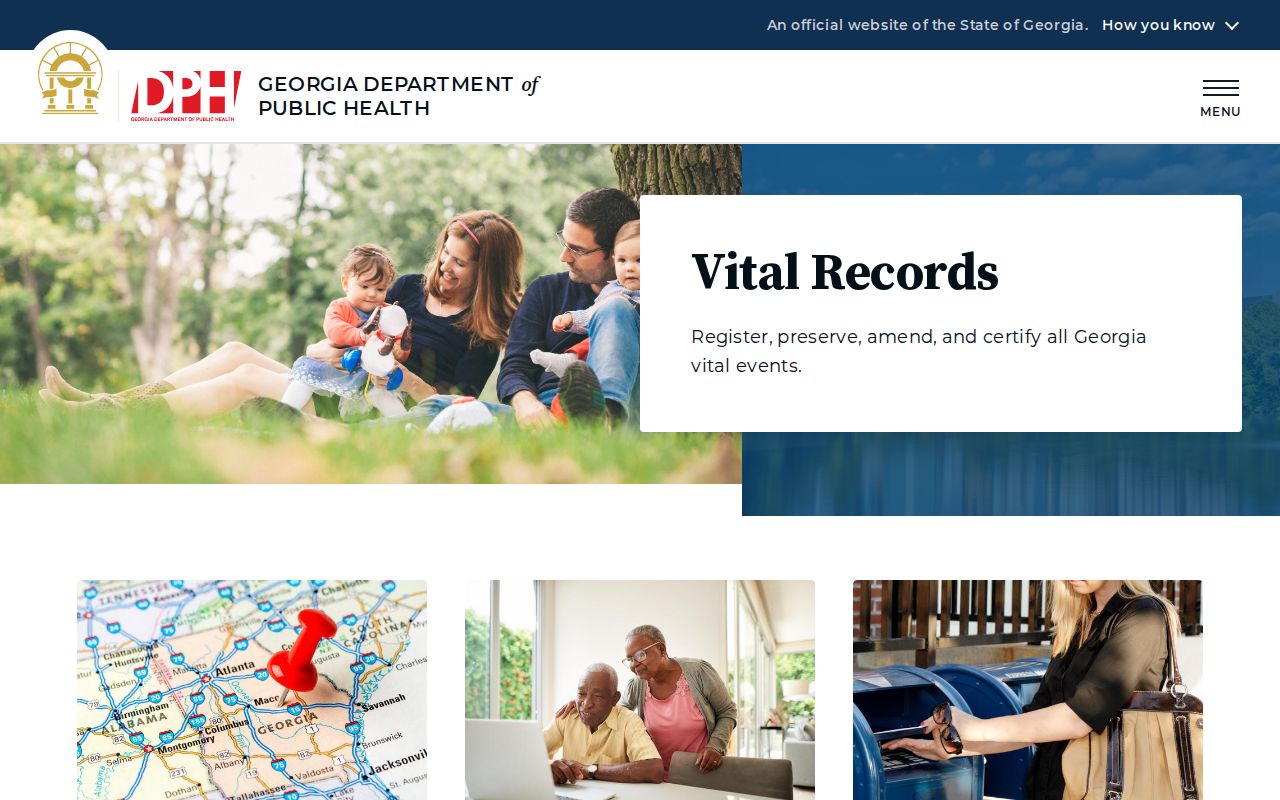
Eligibility is not the same as browsing. The official ordering routes mark the line between a restricted certificate request and a public name index.
Use Athens Probate and Deeds to Identify Heirs
Start an estate search at Athens-Clarke Probate Court. Use the decedent's name and an approximate date. A docket may list the administrator, executor, heirs, filings, and estate property. Sealed or restricted material stays off limits. Compare those names against later deeds from the estate. The deed's grantor line and signatures show how title moved, without touching confidential vital records. That keeps the route lawful for family history and estate questions, because it leans on public indexes and recorded instruments. When an item is not online, ask Probate about its counter, mail, or copy procedure, and ask the Superior Court Clerk for the exact deed book and page. It documents roles, not every relative or occupant.
Confirm Athens Business Identities Carefully
The Georgia Corporations Division search accepts a business name, control number, registered-agent name, or officer name. Results can show the legal name, status, formation date, principal office, registered agent, and filing history. Those fields separate identical names. Match them against a deed or trade-name filing. One caution applies. A registered-agent address is only a service address. The professional license search filters by board, license type or number, personal or business name, city, and state. Local trade names stay with the Superior Court Clerk, and an existing occupation-tax list can be requested from ACC Finance by year and field. These sources verify roles, not household membership.
Keep Athens Searches Inside Privacy Lines
Access is not a license to publish. Driver records are restricted by federal law, Georgia vital certificates follow Title 31, and VoteSafe can shield an eligible voter's address. Those shields matter. If an image exposes a protected identifier, report it to the custodian instead of copying it. Georgia stalking law, O.C.G.A. §§16-5-90 and 16-5-91, can apply when information feeds prohibited surveillance, harassment, or intimidation. Aim directory work at genealogy, estates, reconnecting, consumer verification, and civic understanding. Correct errors with Assessor, Elections, Clerk, or licensing board. Deleting a commercial copy never changes the official record.
Lawful personal use. Never use a name, address, voter entry or court record to stalk, threaten, intimidate or harm a person.
Clarke Digitization Explains Uneven Online Depth
A historical county budget listed digitization projects piecemeal: deed images from 1985-1991, reverse-imaging of deed books 180-368, court cases from 1993-2002, and bound newspapers. That patchwork explains uneven depth. One record group reaches far back online. The next stops at a terminal or archive box. "Not on the portal" is not "not held." The Clerk now links Kofile QuickLinks for Clarke deeds from 1801 through 1984, where a free account shows distorted previews and readable images require purchase. Modern indexing runs through GSCCCA and the courthouse, so treat coverage notes as navigation aids rather than proof a record is missing.
Trace Earlier Athens Residents on Two Library Shelves
Two Athens collections carry the deepest paper trail for past residents. The Digital Library of Georgia has digitized Athens city directories covering 1889 through 1958. Some things you cannot pull up on a screen. For those, UGA's MAGIL and Hargrett holdings and the Athens Regional Library's Heritage Room hold the physical, microform and archival versions. Publishers changed hands over the decades. UGA itself suggests checking multiple catalog records so no household slips past you.
A criss-cross section is the gem in many of these volumes. It works in reverse, turning a street address into its listed occupant. The alphabetical section adds context: an occupation, a spouse, a home notation. Just remember that a yearly entry marks where a family was recorded, not exactly when they moved. The fuller Athens city directory guide shows how to compare volumes, newspapers and maps before drawing that conclusion.
The Heritage Room sits at 2025 Baxter Street and requires registration, though no PINES card. Its local-history materials stay in the room. Staffed access covers directories, microforms, vertical files and databases. UGA rounds out the shelf with Sanborn maps. Its Athens City records run from 1860 to 1970. The Heritage Room's official visitor page lays out how to plan a visit.
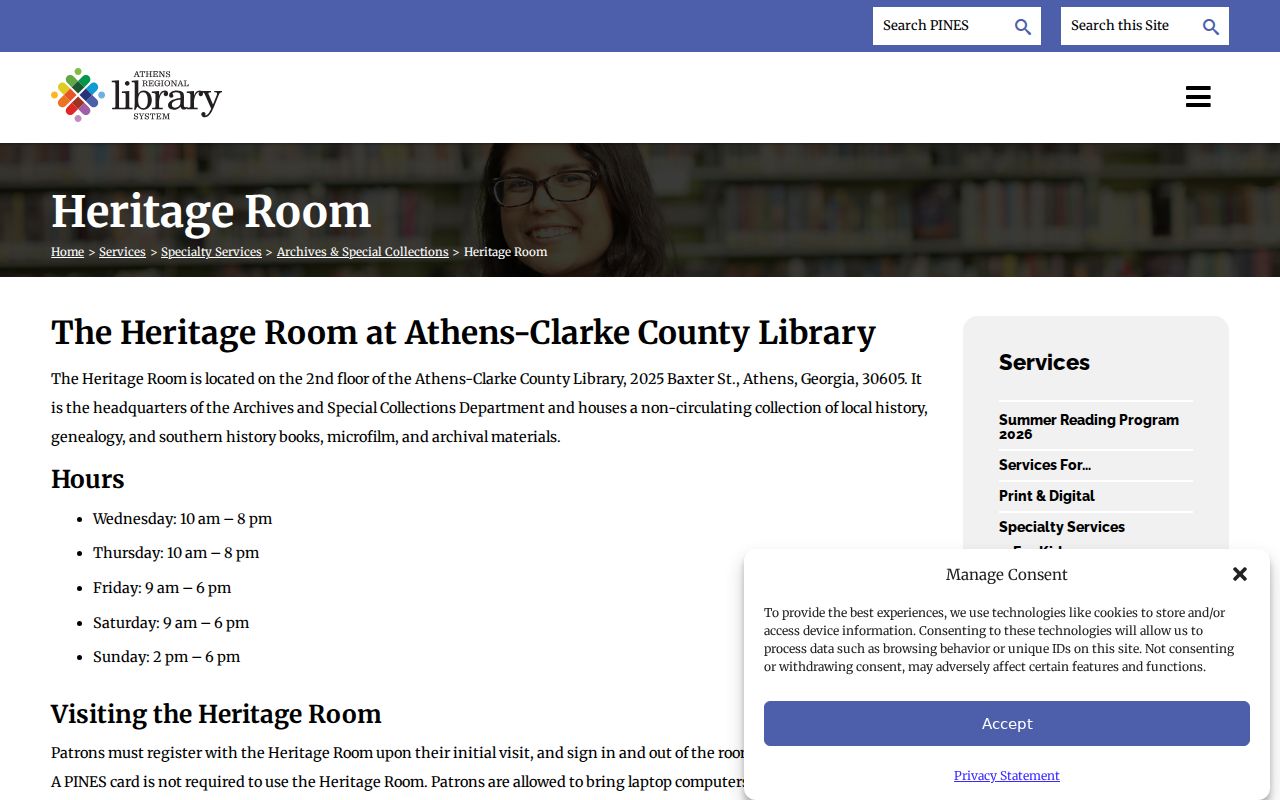
Two library shelves hold what no digital search can. For Athens questions that outlast every OCR index, this printed fallback still answers.